Short answer: a roll label is the most compact sourcing reference you can hold. It confirms the product family, material, coating, mesh count, roll size and color of that specific roll — and it proves nothing about yarn diameter, finished opening, weight or performance. Recording the label fields before comparing prices is the fastest way to make two quotations comparable.
The confirmed label example on this site
The roll shown below is a real, supplied example: black fiberglass insect screen with PVC coating, 18×16 mesh, in a 36-inch × 100-foot roll. Its label is readable, which makes it useful as a worked example rather than a hypothetical.
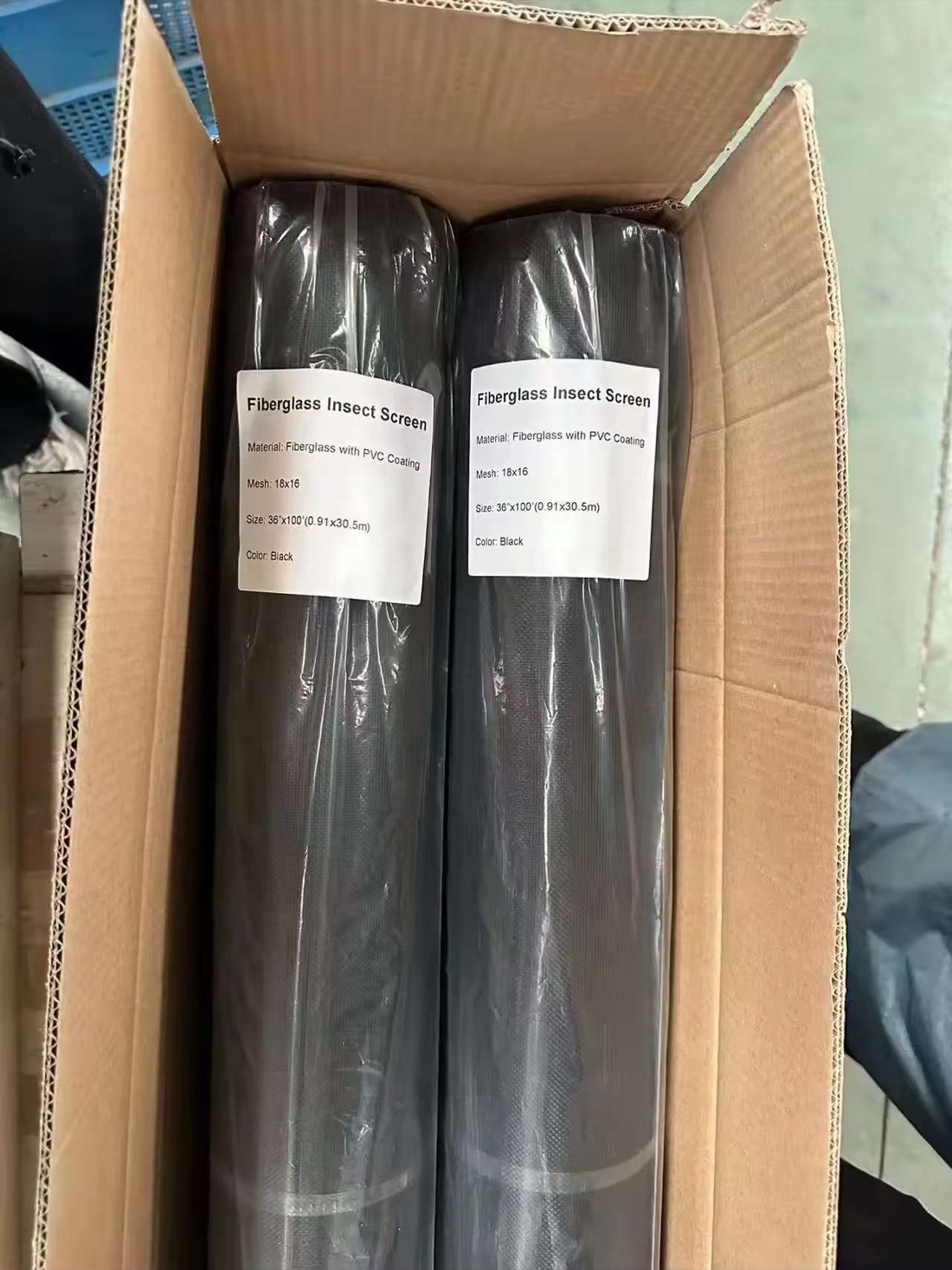
| Label field | Value on this roll | What it means for sourcing |
|---|---|---|
| Product | Fiberglass Insect Screen | Screen fabric in roll form, not a finished window, door or enclosure |
| Material | Fiberglass with PVC Coating | Base material + coating, both part of the construction |
| Mesh | 18×16 | Nominal weave count in two directions |
| Size | 36” × 100’ (0.91 × 30.5 m) | One roll format; other formats may exist |
| Color | Black | Part of the product specification |
What the label can confirm
For this exact roll, the label is evidence for:
- Product family — it is insect screen fabric in roll form.
- Fiberglass material — the label states the base yarn family.
- PVC coating — the coating is part of the labeled construction.
- 18×16 mesh count — the nominal weave, exactly as printed.
- 36” × 100’ roll size — the width and length of this example.
- Black color — the product color of this example.
Each of these fields is a confirmed fact about this roll. That is already enough to start a structured inquiry: a buyer who sends “18×16, black, fiberglass with PVC coating, 36″ × 100′” has given a supplier a comparable starting point.
What the label does not prove
The same label says nothing about the fields below. Treat them as separate questions, not as things you may infer:
| Not on the label | Why it matters |
|---|---|
| Yarn diameter | Two 18×16 screens can use different yarn thicknesses |
| Finished opening size | Opening depends on yarn and construction, not count alone |
| Unit weight (GSM) | Weight is a separate specification value |
| Tensile / burst / tear performance | Performance requires product data or a sample test |
| Airflow or visibility | Not stated on the label; needs data for the specific construction |
| UV life | Not stated on the label; a product-specific property confirmed from current data |
| MOQ, current stock, lead time | Commercial values, confirmed in the inquiry |
| Current certification | A label is not a certificate; if a specification references a standard, certification documents are requested separately |
| Universal availability of this exact roll | One supplied roll example does not make this format the standard for every product |
The practical rule: the label proves what is printed on it. Everything else is a question, not an assumption.
One example of why this matters: the 18×14 pool and patio screen is a confirmed product direction, but its material, weight and roll program are still confirmed per inquiry — it cannot simply inherit the 18×16 label’s construction. And two rolls that both say 18×16 can still differ in ways the label does not capture; see why two 18×16 screens can still be different.
How to use a label in an inquiry
You do not need a perfect specification to start. If you have the current label, send it (or transcribe it), then add the fields a supplier needs for context:
- The label content itself — product name, material, mesh count, size, color.
- Application — window, door, porch, pool enclosure, fabrication.
- Approximate quantity — rolls per order, or whether this is a sample first.
- Destination — country or state.
If you have no label, a close-up photo or a physical sample works as a starting reference — and that is fine too. The point is to keep the conversation anchored to something concrete instead of a generic product name.
Start the inquiry with your label or photo
Other references in this process
- How to compare screen mesh quotations — what to check once the first quotes come back
- A screen mesh RFQ checklist — rebuilding a full request from a label, step by step
- What screen mesh count means — the two numbers explained
- What to verify before a container order — carrying the label reference into bulk purchasing