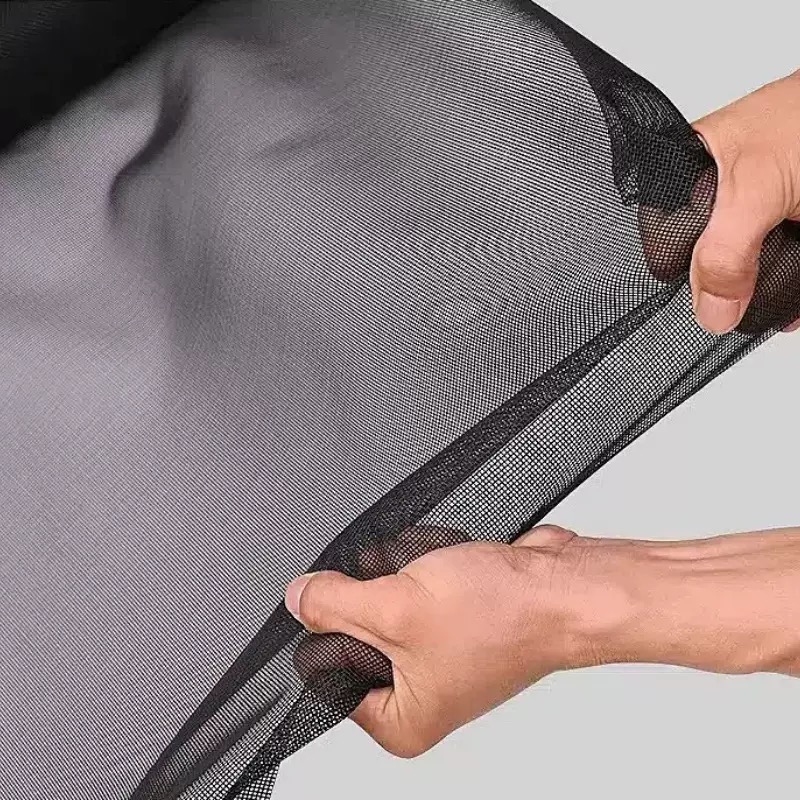
Short answer: these are two answers to different jobs. Standard fiberglass insect screen is the economical baseline for windows, doors and general screening. Pet screen — heavier vinyl-coated polyester mesh — is the family positioned for high-contact situations: pets, kids, traffic, doors that take abuse. If the screen will face claws or heavy contact, the polyester pet-screen family is the market’s positioned answer; if it will not, fiberglass is usually the sensible default. Strength comparisons should be based on product-specific data, not on the nickname.
| Comparison | Fiberglass insect screen | Pet screen |
|---|---|---|
| Material family | Glass yarns with PVC coating | Vinyl-coated polyester |
| Common counts | 18×16, 18×14, 20×20 | 12×12, 15×11, 17×13 (typical catalog counts) |
| Market position | Standard baseline screening | High-contact / heavy-duty screening |
| Relative weight | Lighter constructions | Heavier yarns and constructions |
| Evidence to request | Unit weight, construction, sample | Unit weight, construction, strength data, sample |
What is standard fiberglass screen?
Fiberglass screen — glass yarns with PVC coating — is the standard insect-screen construction for windows, doors and porches. Saint-Gobain ADFORS lists 18×16 as its standard fiberglass window-and-door count, and the confirmed roll example on this site is a black, PVC-coated 18×16 fiberglass screen in a 36-inch × 100-foot roll.
Source: Saint-Gobain ADFORS — Fiberglass Window and Door Screen
For ordinary low-contact screening, this is the product most programs start with — and the one replacement screens are usually matched against.
Review the 18×16 Fiberglass Insect Screen
What is pet screen?
Pet screen is not a mesh count — it is a product family: heavier vinyl-coated polyester constructions sold for screens that take more contact than ordinary window mesh. Public catalogs commonly list pet-screen counts in the 12×12 to 17×13 range, with 15×11 among the most cited.
Typical applications:
- screen doors and pet doors
- porch and patio panels where pets push against the mesh
- rental and high-traffic properties
- replacement programs where ordinary screen fails repeatedly
Count alone does not define pet-screen performance: a heavier product at a similar count can behave very differently depending on yarn thickness, coating and weave. 12×12, 15×11 and 17×13 pet-screen specifications can be compared as sourcing inquiries.
Browse the pet screen category
How much stronger is pet screen than fiberglass?
The most specific published comparison comes from one manufacturer’s own line. Phifer’s FAQ identifies its PetScreen and TuffScreen among its most durable insect screens and describes PetScreen as seven times stronger than standard fiberglass insect screen, citing a Mullen burst strength of 538 psi compared with 75–100 psi for typical fiberglass screen.
Source: Phifer — Insect Screen FAQ
Two boundaries matter when using that number:
- It belongs to Phifer’s product. It does not automatically describe pet screens from other suppliers, whose constructions may differ in weight, coating and weave.
- It is a burst figure. Tear resistance, abrasion behavior and seam or installation durability are separate properties that need their own data.
So the defensible version of the claim is: heavier polyester pet-screen constructions are positioned for high-contact use, and specific products can be dramatically stronger than standard fiberglass — but the strength of the product you are quoted is something to verify, not assume.
When is fiberglass still the right choice?
- Low-contact windows and doors where standard insect protection is the whole job.
- Matching an existing program — most replacement screening in the field is fiberglass, and consistency matters for fabrication.
- Cost-sensitive volume where the heavy-duty premium buys nothing the application needs.
- Sightline-sensitive installations where the lighter standard construction is preferred — a visual judgment best made on samples.
The material-family comparison behind these choices is covered in fiberglass vs polyester screen mesh.
What should a buyer request when contact is the concern?
When the purchase is justified by durability, ask for the fields that make products comparable:
| Field | What it tells you |
|---|---|
| Unit weight | The most practical single indicator of construction heaviness |
| Yarn and coating construction | Separates genuinely heavy products from relabeled standard mesh |
| Test data (burst, tear — method and result) | Product-specific performance, not category folklore |
| Mesh count | Positioning only — not a durability rating |
| Physical sample | The final like-for-like check, including look and handling |
A supplier who can quote pet screen competently should be able to fill that table for the actual product. If the answer is only the word “pet screen,” the comparison is not yet real.
Quick FAQ
Is pet screen just thicker fiberglass?
No. Pet screen is a different material family — vinyl-coated polyester, not fiberglass. The heavier constructions are the point, but the polymer differs from standard fiberglass insect screen.
Does pet screen look different from fiberglass?
Heavier yarns generally give a denser, less open visual appearance than standard fiberglass at comparable counts, but the exact look depends on the construction. Compare physical samples before deciding what your customers will accept.
Can pet screen replace fiberglass everywhere?
Technically it can be installed anywhere mesh goes, but it costs more and changes the look and handling. For low-contact screening, standard fiberglass remains the appropriate specification.
A different product family again is solar screen — the dense shading-class weave whose 90% class is also positioned for daytime privacy; see the solar screen buying guide if privacy rather than pet contact is the underlying need.
Sources and product references
- Phifer — Insect Screen FAQ
- Saint-Gobain ADFORS — Fiberglass Window and Door Screen
- A screen mesh RFQ checklist — the fields a pet-screen quote must capture
Sourcing either family?
Send the application, the current screen’s label or spec, and the volume range. The comparison can start from there.