Short answer: fiberglass and polyester are two different material families in insect screening, and neither is universally better. Fiberglass screen — glass yarns with PVC coating — is the standard construction for windows, doors and general insect screening. Polyester is a family rather than one product: it covers standard polyester window screen, vinyl-coated polyester pet screen and most pleated screen mesh. Which family fits depends on the application, the handling requirement and the verified construction of the actual product — not on the material name alone.
| Comparison | Fiberglass screen mesh | Polyester screen mesh |
|---|---|---|
| Material family | Glass yarns with PVC coating | Polymer (PET) yarns, often with coating |
| Common constructions | 18×16 window/door screen, 18×14 pool screen, fine counts like 20×20 | 20×20 window screen, pet screen (12×12–17×13), pleated mesh |
| Typical market position | Standard insect screening baseline | Application-led: pet screen, pleated systems, non-fiberglass requests |
| Family members | Mostly one product logic | Several — window, pet, pleated, fine pollen counts |
| What to verify per product | Yarn diameter, unit weight, opening, UV data | Yarn, coating, unit weight, opening, UV data |
What is fiberglass screen mesh?
Fiberglass screen is woven from glass yarns and coated with PVC, which gives the mesh its color and handling characteristics. Saint-Gobain ADFORS lists 18×16 as its standard fiberglass window-and-door construction, and Phifer positions 18×14 fiberglass for pool and patio enclosures — the two workhorse counts of the U.S. market.
Sources: Saint-Gobain ADFORS — Fiberglass Window and Door Screen · Phifer — 18×14 Pool & Patio Screen
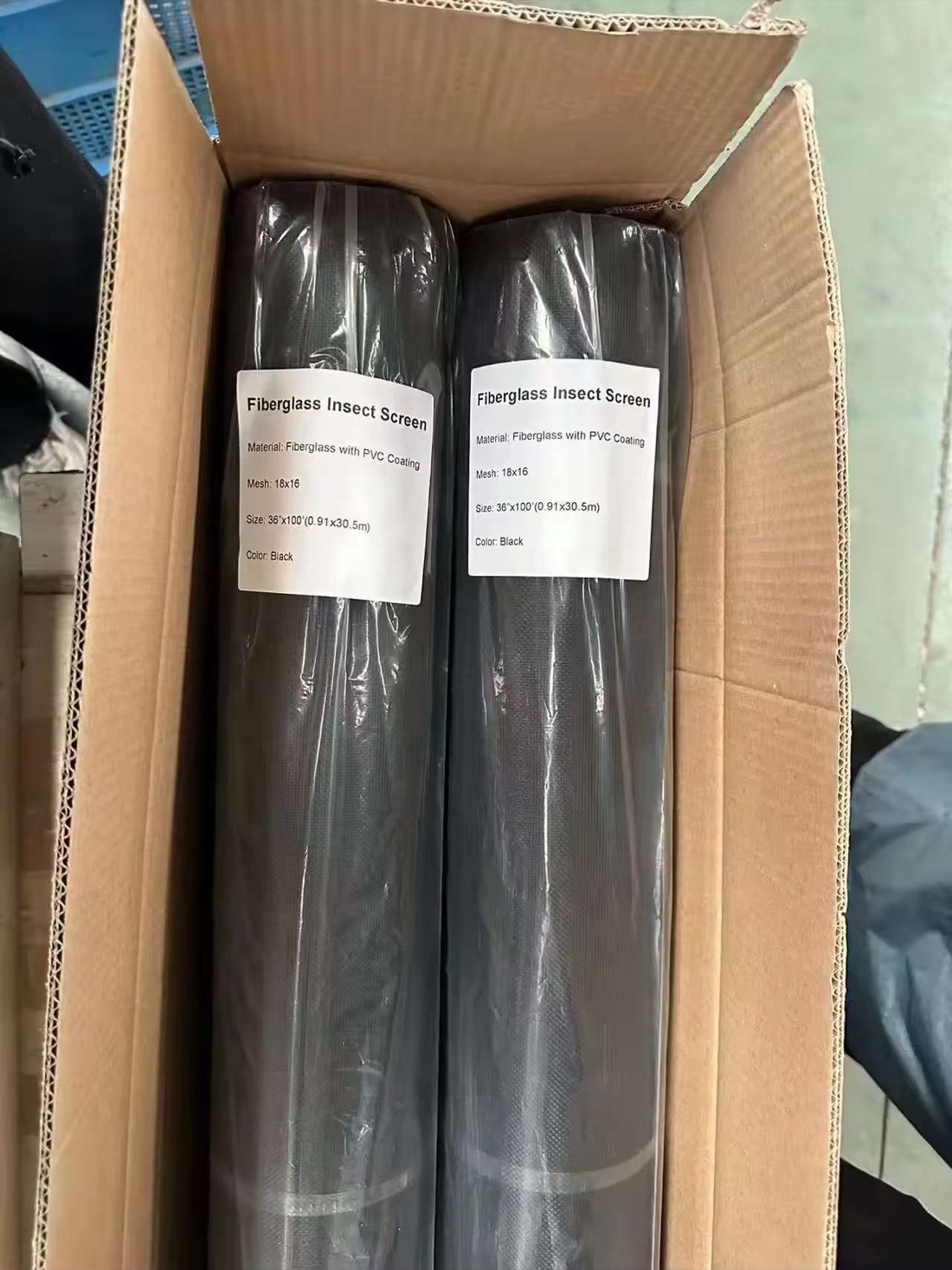
The confirmed roll example on this site is exactly that baseline product: black, PVC-coated fiberglass insect screen, 18×16, in a 36-inch × 100-foot roll.
Review the 18×16 Fiberglass Insect Screen
What does “polyester screen” actually cover?
Polyester is not one product, and treating it as one causes bad comparisons. The family commonly includes:
- standard polyester window screen — for example 20×20 polyester for buyers who require a non-fiberglass material;
- vinyl-coated polyester pet screen — heavier constructions for high-contact screening;
- pleated (plisse) screen mesh — polyester is the common construction in pleated systems, alongside PP/PE;
- fine polyester counts — including directional counts such as 17×60 marketed for pollen screening.
20×20 polyester window screen and the polyester & PP/PE category show the non-fiberglass side of this supply range.
The practical consequence: when a buyer says “polyester,” the next question is always which polyester product, at what count and construction? A 20×20 polyester window screen and a 15×11 pet screen serve different jobs.
Which material is stronger?
There is no honest single answer, because strength belongs to the construction, not the polymer name.
The clearest published comparison comes from one manufacturer’s own product line: Phifer’s FAQ describes its vinyl-coated polyester PetScreen as seven times stronger than standard fiberglass insect screen, citing a Mullen burst strength of 538 psi versus 75–100 psi for typical fiberglass screen. That statement is specific to Phifer’s products — it does not transfer automatically to every pet screen or every fiberglass screen from other suppliers.
Source: Phifer — Insect Screen FAQ
The general pattern holds across the industry: heavier polyester constructions are positioned for high-contact use, while standard fiberglass is positioned as the economical baseline. Where strength genuinely matters to a purchase, the buyer’s protection is data for the actual product — unit weight, coating construction and test results — plus a physical sample comparison. The detailed reasoning is covered in pet screen vs fiberglass screen.
Which material handles UV exposure better?
This is where published sources actively disagree, and buyers should know it.
Some supplier pages claim fiberglass screen degrades and becomes brittle under UV exposure; others describe fiberglass as UV-resistant and non-degrading in normal service. Both claims circulate in supplier marketing, and they cannot both be the whole truth as stated — the honest position is that UV service life is product-specific: it depends on the yarn, the coating system, and the formulation of the actual product being quoted.
The same caution applies to polyester and PP/PE. A polymer name does not carry a UV rating.
The defensible purchasing rule: if outdoor service life matters to the deal — and for pool enclosures it usually does — request the supplier’s current data for the specific construction, and verify with a sample or an agreed test rather than accepting either material story from marketing copy.
Which material should you choose?
- Standard window, door and porch screening: fiberglass 18×16 is the common baseline, and it is usually the default for matching existing screens.
- Pool and patio enclosures: 18×14 fiberglass is the conventional count; the finer-count question is separate — see 18×14 vs 20×20.
- High-contact applications (pets, heavy traffic): the vinyl-coated polyester pet-screen family is the positioned answer, judged on verified construction data.
- Pleated and retractable systems: polyester and PP/PE dominate; the choice between them is covered in pleated screen mesh: polyester vs PP/PE.
- Explicit non-fiberglass requirements: polyester window screen exists for exactly this case — keep the material requirement written in the RFQ.
What should you compare besides the material name?
| Field | Why it matters |
|---|---|
| Mesh count | Identifies the nominal weave — pair it with yarn data for real openness |
| Yarn diameter / unit weight | Distinguishes products that share a count |
| Coating | Part of handling, color and outdoor behavior |
| Roll width and length | Fabrication format and freight economics |
| Color | Part of the approved specification |
| Performance evidence | Any claim that matters — UV, strength, exclusion — needs product-specific support |
| Sample | The final like-for-like check before volume purchasing |
Quick FAQ
Is polyester screen better than fiberglass?
Neither is universally better. Fiberglass is the standard, economical baseline for window, door and pool screening; heavier polyester constructions are positioned where high contact or specific fabrication requirements exist. The correct comparison is between actual constructions with data, not between material names.
Can fiberglass and polyester screen be substituted for each other?
Sometimes, but substitution should be approved against the application and an accepted sample. The two families differ in handling, construction and product range, so the swap changes more than the label.
Why do sources disagree about fiberglass and UV?
Because most UV statements in circulation are marketing-level generalizations rather than product test data. UV life is a product-specific property, so make current data or a sample part of the comparison whichever material you buy.
Sources and product references
- Saint-Gobain ADFORS — Fiberglass Window and Door Screen
- Phifer — 18×14 Pool & Patio Screen
- Phifer — Insect Screen FAQ
- Aluminum vs fiberglass screen — the metal-mesh alternative compared
- How to compare screen mesh quotations — normalizing quotes across material families
Comparing materials for a live program?
Send the current product name, count, label or sample reference. The comparison can start from what you already use.