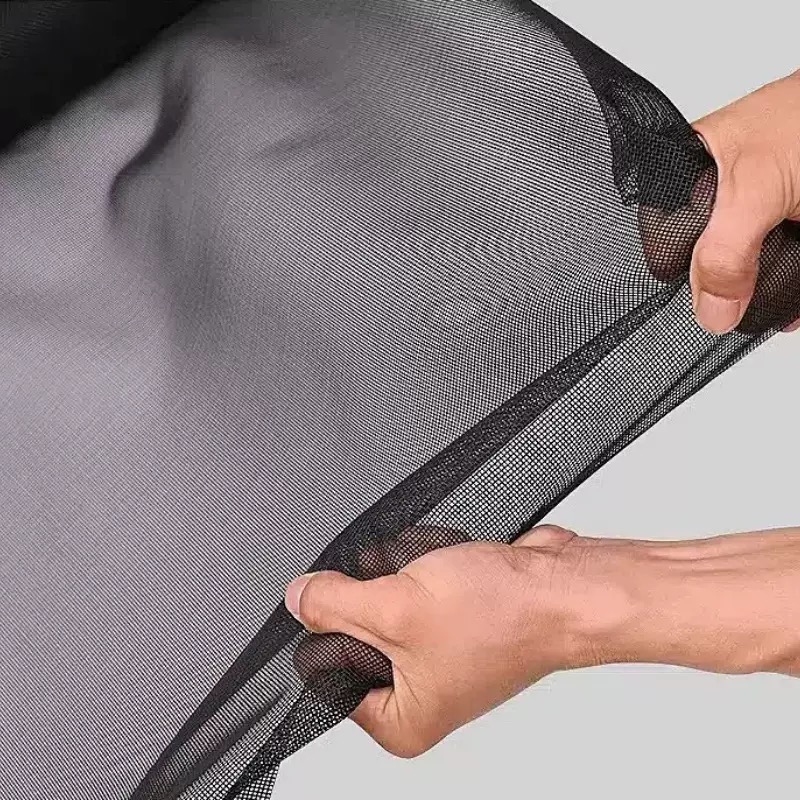
Short answer: 18×14 is a more open nominal mesh count than 18×16. In the U.S. screen market, 18×14 fiberglass screen is commonly positioned for pool and patio enclosures, while 18×16 fiberglass screen is a common construction for windows, doors and general insect screening. But mesh count alone does not tell you the exact opening size, airflow, visibility or strength of a finished screen. Material, yarn diameter, coating and finished construction also matter.
| Comparison | 18×14 screen mesh | 18×16 screen mesh |
|---|---|---|
| Nominal mesh count | 18 in one direction × 14 in the other | 18 in one direction × 16 in the other |
| Common market use | Pool cages, patios, lanais, large enclosures | Windows, doors, porches, general insect screening |
| Typical fiberglass market position | Pool & patio screen | Standard insect / window screen |
| What mesh count tells you | Relative weave count | Relative weave count |
| What it does not tell you by itself | Exact opening, airflow, visibility, tensile strength, service life | Exact opening, airflow, visibility, tensile strength, service life |
What do 18×14 and 18×16 actually mean?
The two numbers describe the number of strands or openings counted in two perpendicular directions of the mesh.
That makes mesh count useful for identifying and comparing screen constructions. It is not a complete specification.
For example, two screens with the same 18×16 count can still differ in yarn diameter, material, coating, unit weight and finished opening size. Those differences can affect how the screen looks, handles and performs.
This is why a professional comparison should start with mesh count, but not stop there.
What is 18×14 screen commonly used for?
A major U.S. screen manufacturer, Phifer, lists its 18×14 fiberglass mesh as a traditional choice for patio and pool enclosures. Its current product page also lists wide roll options, which fits the larger openings common in pool cages and screened patios.
Source: Phifer — 18×14 Pool & Patio Screen
Typical applications include:
- pool cages
- screened patios
- lanais
- large porch or enclosure panels
- rescreening of existing outdoor enclosures
The important point is the application pattern, not the assumption that every 18×14 product has identical strength, airflow or durability.
Review the 18×14 Pool & Patio Screen page
What is 18×16 screen commonly used for?
Saint-Gobain ADFORS lists 18×16 fiberglass screen as its standard window-and-door fiberglass construction. Its published specifications include multiple roll widths and lengths for general screening use.
Source: Saint-Gobain ADFORS — Fiberglass Window and Door Screen
Typical applications include:
- window screens
- screen doors
- porches
- replacement screening
- fabrication programs using standard insect screen rolls
The confirmed roll example on this website is a black, PVC-coated fiberglass 18×16 screen in a 36-inch × 100-foot roll.
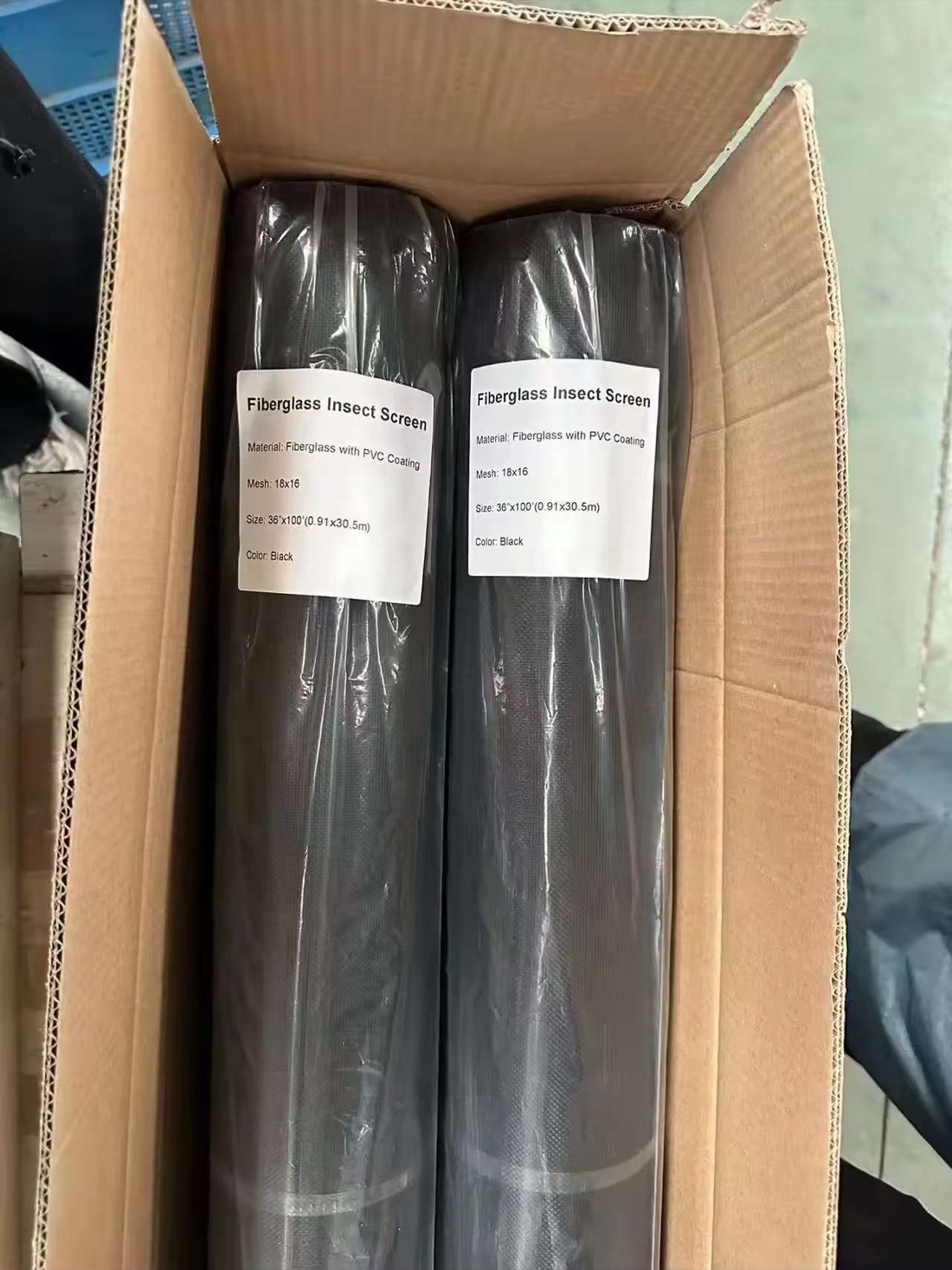
Review the 18×16 Fiberglass Insect Screen page
Is 18×14 more open than 18×16?
By nominal count, yes: 18×14 has fewer strands in one direction than 18×16.
But that does not automatically give you the finished opening size. A thicker yarn can reduce the open area, while a thinner yarn can increase it. The same logic applies to airflow and viewing clarity.
So a safe comparison is:
- mesh count tells you how the weave is counted;
- yarn diameter and finished opening help tell you how open the screen actually is;
- material and coating help define the construction;
- sample or technical data should confirm the characteristics that matter to your application.
This is also why it is risky to choose a screen only from the phrase “18×14” or “18×16.”
Does 18×14 have better airflow than 18×16?
Not necessarily.
If two screens used the same material, yarn diameter and construction, the lower nominal count would generally imply a more open weave. Real commercial products, however, are not always identical in those other variables.
For purchasing, ask for the actual construction or compare physical samples rather than treating mesh count as an airflow rating.
Which mesh should you choose for a pool cage?
If you are replacing or sourcing a conventional fiberglass pool-enclosure screen, 18×14 is a common starting point in the U.S. market. Phifer places 18×14 directly in its pool-and-patio range, and its screen selection guide also groups 18×14 fiberglass with pool-enclosure applications.
That does not mean every pool project should use 18×14. Other products, including finer insect screens and polyester constructions, are also used depending on the buyer’s priorities.
For an existing pool cage, the fastest way to avoid a wrong comparison is to check the current roll label, old purchase specification or an approved sample.
Which mesh should you choose for windows and doors?
For standard fiberglass window and door screening, 18×16 is a widely used reference construction. ADFORS currently lists 18×16 as the construction for its standard fiberglass window-and-door screen.
If you are matching an existing fabrication program, keep the exact mesh count in the RFQ and also confirm:
- material
- coating
- color
- roll width and length
- yarn diameter or unit weight if relevant
- any sample-matching requirement
Can 18×14 and 18×16 be substituted for each other?
Sometimes a buyer may be able to change from one construction to another, but the mesh count alone is not enough to approve a substitution.
Before changing, check three things:
- Application: pool enclosure, window, door, porch or another use.
- Product construction: material, yarn, coating, finished opening and roll format.
- Acceptance criteria: what the installer, fabricator, distributor or end customer actually notices and requires.
If the existing product works well, a current label or sample is usually a better benchmark than a generic product name.
What should a B2B buyer compare besides mesh count?
For a useful like-for-like quotation, compare the fields that can materially change the product or commercial result:
| Field | Why it matters |
|---|---|
| Material | Fiberglass, polyester and other polymers are different product families |
| Coating | Part of the finished construction and handling characteristics |
| Mesh count | Identifies the nominal weave |
| Yarn diameter / unit weight | Helps distinguish products with the same mesh count |
| Roll width and length | Directly affects fabrication, installation and price comparison |
| Color | Part of the approved product specification |
| Packing | Relevant for distribution and handling |
| Volume | Affects the commercial quotation |
You do not need all of this information before contacting a supplier. If you only know the application or have a photo of the current roll label, that is already enough to start the conversation.
Quick FAQ
Is 18×14 screen only for pools?
No. It is commonly sold for pool and patio enclosures, but the final application depends on the actual product construction and project requirement.
Is 18×16 the standard window screen size?
18×16 is a common fiberglass window-and-door screen construction in the U.S. market. It is not the only available construction.
Is a higher mesh count always better?
No. A higher count simply describes a denser nominal weave. Whether that is better depends on insect protection, visibility, airflow, handling and the actual product construction.
What if I do not know whether my current screen is 18×14 or 18×16?
A close-up photo, roll label, old specification or physical sample can usually provide a better starting point than guessing.
Sources and product references
- Phifer — 18×14 Pool & Patio Screen
- Phifer — Screen Selection Guide
- Saint-Gobain ADFORS — Fiberglass Window and Door Screen
Continue the comparison
- What does screen mesh count mean? — the two numbers explained
- 18×14 vs 20×20: pool screen vs no-see-um screen — the open-versus-fine comparison
- Fiberglass vs polyester screen mesh — the material-family comparison
- Why two 18×16 screens can still be different — when the same count is not the same product
- How to compare screen mesh quotations — checking quotes with the same count
Need to compare your current screen?
Send whatever you already have — a product name, mesh count, roll label, photo or application. We can start from that and clarify the missing details afterward.